Showing posts with label magnetic. Show all posts

Thursday, 6 March 2014

Periodic Table By Electrical Conductivity

Here is a very useful graph showing how conductive or restive known elements are. When metal detecting the conductivity of you target plays a huge part in deciding what to dig.


Below is the same data in a list format. I've highlighted the good stuff.

Tuesday, 4 March 2014

Easy Homemade Gold Sucker


Other tube id 1 1/2″ type 125 PVC
Inner tube is 1 1/4″ Type 40 PVC
Length is about 3-4 feet.
The handle is made from 1/2″ PVC end caps and a 1/2″ tee with a couple of short pieces of 1/2″ PVC pipes to connect. The handle is bolted thru handle to the end cap.
Use 1/8″ file for O-ring grooves. Depth of O-ring grooves must be about 1/2 of the dia of the O-ring cross section. Note: I have excluded part numbers as this design is from 1994 and part numbers chance. Because of this you may need to have a poke around your local hardware providers to find an O-ring that gives the best seal.
With the crevice sucker attached, the plunger may be pumped several times until the material reaches the top of the 1/2″ pipe. Another possible attachment would be a 1 1/2″, 45 or 90 degree tool instead of the normal crevice sucker.
Since the gold sucker is normally used with the bottom open, you may be asking “how do you keep the stuff from falling out the bottom?” The short answer is ya gotta be quick. Try to keep your bucket or pan as close to the spot you are working ans almost submerged so you don't have to move the sucker very high or very far. It also helps if you can get into a rhythm where you are still pulling on the plunger while transferring the material. Clean up any material that falls out every now and then.
Credits for the design go to William F Westcott (1994)

VLF metal detectors and their operating properties

There are many good explanations on how a VLF metal detector operates available all over the web. They range from very hi-tech to not so much. When I decided that I needed to have a better understanding of all the voodoo involved I knew that I would be wading through some very heady material that I was going to have problems wrapping my head around. So here are the conclusions I have drawn based on my own research I hope I've been able to lay it out in a clear and concise manner that you can understand. If you have anything of value to add, corrections or ideas please comment and let me know.

Quick overview of a typical VLF (Very Low Frequency) Metal Detector


A basic metal detector consists of a control box and search head mounted on a shaft.

The Search Coil / Head


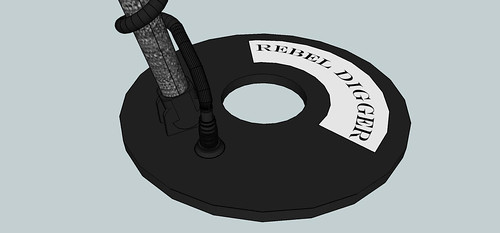
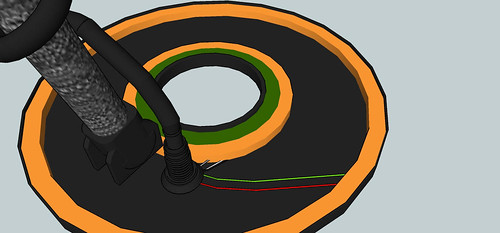
The guts of the search head consists of two coils made of copper. One coil is the “transmit” coil and the other is the “received” coil.These are normally written as TX Coil and RX Coil. These coils are electrically separate from each other (As in they don’t touch each other) and exit the search head via a normally waterproof connector that runs along a set of wires up into the control box.


The Control box


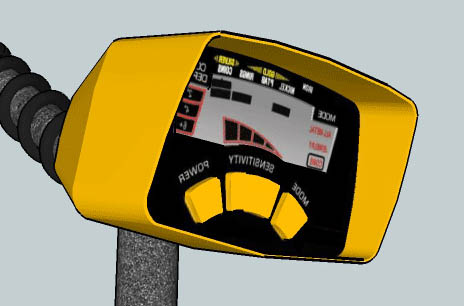
The erm “Brain” of the machine. To be honest this little box will be your friend but also your worst enemy, well at least at the start anyway. Internally the control box consists of the detectors circuitry, batteries, control knobs, buttons, speaker and maybe a visual display of some kind. Different brands or detector will have varying names for the functions of a their detector. But VLF metal detectors as a rule of thumb have the ability to produce a noise relative to your target via the control boxes internal speaker or via a set of headphones. Ability to discriminate targets based on their conductivity. With a lot of modern machines you also get a visual display the shows numbers indicating your target this differs depending on the brand of detector you're using and even how deep it is (More on this later because nothing in life is that simple). We now know the parts that make up the detector we can have a look at how the thing actually works. The control box generates an electromagnetic field in the transmit coil. As you swing your detector over a metallic object that object interacts with the magnetic field this change in the magnetic field in picked up by the RX coil. The change received by the RX coil is slightly different depending on the conductivity and size of the target. These changes are processed by the control boxes circuits. On moderns machines much of the analyse is carried out by a processor. The processor contains software that is developed by manufactures for their machines this software is a closely guarded secret. But in general the signals generated and received are analysed by complex algorithms that are designed to give better separation between targets and also better identification of those targets.
As time marches on and technology improves metal detectors get better and better at what they do. Whatever technology proves best maybe just improved versions of what we use now or maybe there is a new technology just around the corner?