
Showing posts with label detecting. Show all posts
Showing posts with label detecting. Show all posts
Thursday, 7 April 2016

Wednesday, 12 November 2014
HubPages: Why I Chose the Garrett AT Pro Metal Detector

Not long ago, I got into metal detecting when I received a Bounty Hunter QuickSilver as a gift. It was a low end metal detector, but I quickly became fascinated with this hobby. I quickly knew that I wanted to get a new metal detector that would do a better job of detecting and identifying objects in the ground. I chose to purchase the Garrett AT Pro metal detector after doing much research, and I can't tell you enough how much I love this machine.
The Bounty Hunter model was a pretty basic model. Don't get me wrong, it worked just fine but did not reveal much information about the target that it detected. I spent way too much time digging up objects that ended up just being trash. This detector really helped me to realize that this was a hobby I am very interested in, and would continue to pursue. Like with all my hobbies, I found myself wanting to use quality gear. Quality gear that offers more capabilities leads to a more enjoyable experience and better results. If I was going to spend the time outdoors searching for 'my treasures', then I wanted to have the best gear that I could justify purchasing, and get the best results for my time.
I have found lots of coins, several pieces of jewelry, and many other cool things with my AT Pro. You can see some of them in the photo gallery below. I even had the opportunity to reunite a girl with her lost wedding ring after answering an ad that they posted looking for someone with a metal detector. The smile on her face when she was reunited with her lost ring was almost as gratifying as the thrill that came with finding it.
So why did I choose the Garrett AT Pro, when there are so many more metal detectors on the market that cost less? Let's take a closer look at the Garrett AT Pro's features and benefits, and see why I ended up choosing this model.

My Metal Detector Research - Learn before you invest.
I started off like everyone else, looking at the Amazon reviews, reading about metal detectors on the manufacturers' websites, and reading about what other people had to say in metal detecting forums. I had originally set a budget of $400.00 for my new purchase, and was looking at models within that price range. I was serious about getting into this hobby, and willing to spend a bit of money to get the right gear. At the time, this price range did not include the Garrett AT Pro, which costs right at $600.00.
I found several models that I liked, which included the Fisher F2 and the Garrett Ace 350, but was leaning toward the Ace 350. I liked the look and feel of this machine, and the feature set that it offered. It had great reviews and there were lots of people in the metal detecting forums that had great things to say about it. Though I noticed that most of the people in the forums that had good things to say about it were using the Garrett AT Pro. You see, in the online metal detecting forums, it is a common practice for the forum members to put the type of metal detector (along with some bragging about their metal detecting finds) in their forum signature. I kept seeing the Garrett AT Pro model popping up everywhere.
What really helped me make up my mind is when I consulted with another metal detectorist that lives in my home state of Kentucky. I had been watching a lot of his YouTube videos of his metal detecting hunts, and could see that he definitely knew his stuff. This guy used the top of the line MineLab equipment that was definitely out of my price range.
I approached him for guidance about metal detector selection and what my price range was. He spent a lot of time communicating with me about my options and offering advice. He told me that the selection of a metal detector is often where the biggest mistake is made for people who were serious about getting into the hobby. He told me that I really needed to stretch my budget by a couple of hundred dollars, and make the Garrett AT Pro the low end model of my metal detector options. He stated that it had features and performance that rivaled many of the more expensive detectors on the market today. The main reason he recommended this model though is due to the amount of iron in the soil here in Kentucky, and the Garrett AT Pro's advanced iron circuitry does a great job with discrimination. He told me how less expensive metal detectors can work just fine, but they come with 3 to 5 times the frustration level. He also stated that "This detector 'holds its own' with $1500-1800 metal detectors all day."
So after receiving this advice from someone that I trusted, I did my due diligence and performed more research on the AT Pro. I went to Garrett's website, and watched all of their instructional videos, read all of their literature, and reviewed all of the specifications of this model. I'll give you a closer look at the specifications and features that attracted me below, but by the time I had completed this research, I had made my decision.
Garrett AT Pro Specs
What attracted me and why.
I set out to find a metal detector that would perform well, have great quality components, and suit my needs for many years to come. Here are some of the key features about the Garrett AT Pro that really attracted me to this model.
Pro Mode Audio - In pro mode, you get to hear variable tone for what type of target is detected beneath the ground. The strength of the tone varies depending upon the depth as well. I love this because you don't always have to be looking at the LCD screen. You can let your ears do the work.
High-Resolution Iron Discrimination - You can set the amount of iron discrimination to one of 40 levels. This gives you the ability to tune out junk signals depending upon your needs.
Digital Target ID - When a signal is detected, a two digit numeric target ID is displayed on the LCD screen. This gives you the ability to distinguish one target from another based on its conductivity.
Fast Recovery Speed - When there are multiple targets in the ground, the AT Pro recovers quickly allowing it to detect multiple targets that are close to each other. This is great for trashy areas.
Waterproof to 10 Feet - This detector can be submerged to a depth of 10 feet. You need waterproof headphones for this. Lots of great stuff can be found in lakes and streams, and these are places that other metal detectorists typically can't take their metal detectors.
Operates at 15 kHz - Operating at this frequency allows this detector to identify small targets, gold, and jewelry that other metal detectors have trouble identifying.
Ground Balancing - You have the ability to automatically or manually ground balance this metal detector. This allows for compensation of mineralized soils or sand to allow items to be detected more easily.
Pinpointing Capability - The AT Pro has a pinpoint button that allows you to detect the exact location of where the object is buried. When you know exactly where to dig, you spend less time digging and can dig smaller holes.
Coin Depth Indicator - The Garrett AT Pro does a great job of estimating the depth of a coin sized object that is detected. Armed with this information, you know how deep you need to be digging to locate your object.
(Image Credit to InterRev - Personal Photo)
Learning About the Garrett AT Pro Metal Detector

The Garrett company recommends that you start off using the AT Pro in standard mode for at least the first 10 hours of operation, and that you dig every target that you detect. While this will have you spending a bunch of time digging junk targets, it is beneficial because it allows you to learn the type of signals that are associated with each object you find in the ground.
To be honest with you, I didn't make it but maybe an hour on standard mode before I switched over to pro mode. Since I have already used metal detectors in the past, I felt that this shortened my learning curve. I wanted to get right into pro mode as soon as possible so that I could start using the advanced features of this machine. I felt that all of the video training helped to jump start me anyway, and I was ready to "go pro".
I quickly learned to scan a detected object from multiple angles to see if the signal remained consistent. Utilizing the pinpointing feature of this detector from multiple angles also assisted in determining the precise location of the object in the ground. Learning to pinpoint an object accurately allowed me to dig smaller, precise holes. It also shortened the amount of time required to locate and recover the detected object.
I have become very proficient with my AT Pro in a short period of time, but every outing is a learning opportunity that teaches you something new though.
My Thoughts About the AT Pro
The Perspective From an AT Pro Owner and User
The short answer is that "I Love It".
While I don't want to bash the Bounty Hunter model that I started with, this AT Pro just offers so much more capability. The signals that it provides almost paints a picture as to what lies beneath the surface.
I am most impressed with the pinpointing capability, that allows it to identify the exact spot to dig. With my old detector, I often missed the mark and had to continue digging my hole wider and wider until I located the object.
I do a lot of hunting for coins (referred to as coin shooting), and the Garrett AT Pro consistently identifies the denomination of the coin before I ever start to unearth it. As with any metal detector, it doesn't get this right 100% of the time, but more often than not it is on the money!
I guess the biggest benefit that I get from using the AT Pro, is that it instills confidence in me. I know this is a quality metal detector with quality electronics. Based on what it tells me and the education that I have received on using it, I am very confident that the targets I choose to dig won't be trash. Time spent digging good targets instead of trash targets makes for a much more enjoyable (and profitable) experience. And that my friend, was worth spending the extra money that I had not originally budgeted for.
I guess the biggest benefit that I get from using the AT Pro, is that it instills confidence in me. I know this is a quality metal detector with quality electronics. Based on what it tells me and the education that I have received on using it, I am very confident that the targets I choose to dig won't be trash. Time spent digging good targets instead of trash targets makes for a much more enjoyable (and profitable) experience. And that my friend, was worth spending the extra money that I had not originally budgeted for.
Taken from: Here
Sunday, 2 November 2014
Metal Detecting 101
The Tesoro coil zipped back and forth over the freshly plowed field. The silence was suddenly broken by several distinct beeps. Found something! The army shovel easily dug into the soil. My excitement grew. As I sifted through the dark dirt, a metallic form appeared—the key to an old GM truck. Ok, I admit, not a huge find, but it does not negate the fun and a good time outdoors.

January, February and March have offered up several mild days this year. Those months are a fine time to get out and do some metal detecting. Last year my next door neighbor bought a metal detector and three weekends ago we set out to hunt the aforementioned field. We found several other items that day: pieces of plows, rifle casings, shotgun casings, pull tabs, etc. But his son stumbled upon a nice arrow head—a tremendous discovery.
I’ve enjoyed this pastime for about six years plus. A very satisfying—and addictive—outdoor hobby. So, I wanted to take a moment and share some things I've learned and let you know about this wonderful activity. Here goes:
What You Need

Buy a decent metal detector. No, you don’t have to buy high-end with all the fancy bells and whistles. My Tesoro Silver uMax has all the basic features and performs great. I purchased mine for around $300. The main ability you want from a detector is a discrimination setting to filter out “junk” metal. And good sensitivity settings. Some use dials and sounds to do this and others employ electronics with digital readouts. Shop around for a quality product. Go check out Tesoro’s website to learn more about detecting and their products: http://www.tesoro.com/
You need a small, but strong shovel. I carry an army shovel found at your local Army Surplus Store. Nice fitting gloves help you dig and sift without cutting your fingers. I also carry a carpenter’s nail pouch around my waist. This is where all my finds, along with junk metal are stored. Don’t just throw junk metal back down. Otherwise, you may be digging it back up in the future. Plus the property owner does appreciate you cleaning up a bit.
Another handy accessory: a set of headphones. These plug into the metal detector and allow you to search without anyone hearing the sounds, but you. I use this at the beach so I won’t disturb my fellow vacationers.
When to Go
I prefer the late fall to early spring timeframe. Bugs are still gone and vegetation is still dormant. While you're there, mix in some shed hunting and preseason scouting for turkeys.
A recent rain makes the soil easy to manage. Also, if looking for arrowheads, the rain helps wash dirt away from the artifact.
Where to Hunt
Always, always follow the laws. Most state parks and federal lands will NOT allow metal detecting. There are stiff fines for not observing these rules.
I try to look for old home sites or abandon roads. A few years ago, I found a stash of wheat pennies buried along an old logging road. In the mix was a 1902 Indian head penny. Other great sites: old outhouses, campsites, farm sites, church grounds, plowed fields, places where social events were held, historic travel routes, etc.
The beach is another great place. I usually find modern coins there. Occasionally, one might find a ring which has slipped off a wet finger.
Most times, you will be searching on private property. See the next section for metal detecting ethics.
Metal Detecting Etiquette
Leave the land like you found it. Dig small undetectable plugs. Stay away from emasculate lawns and expensive landscaping. Some metal detecting hobbyists leave a bad taste in others mouths because they leave huge potholes behind. Never leave trash. Also, don’t fail to tell the owner about those tire-blowing nails you found and that you removed them.
Never trespass. Get permission from the property owner. Make sure you have an agreement about your finds. After all, it is their property. I’ve found that owners can be very curious about what might be buried on their land. Be truthful and they will be inclined to invite you back.
For more, look at Tesoro’s Metal Detectorist Code of Ethics.
Take a look at some pictures of my Tesoro and my finds. Happy treasure hunting!
January, February and March have offered up several mild days this year. Those months are a fine time to get out and do some metal detecting. Last year my next door neighbor bought a metal detector and three weekends ago we set out to hunt the aforementioned field. We found several other items that day: pieces of plows, rifle casings, shotgun casings, pull tabs, etc. But his son stumbled upon a nice arrow head—a tremendous discovery.
I’ve enjoyed this pastime for about six years plus. A very satisfying—and addictive—outdoor hobby. So, I wanted to take a moment and share some things I've learned and let you know about this wonderful activity. Here goes:
What You Need
Buy a decent metal detector. No, you don’t have to buy high-end with all the fancy bells and whistles. My Tesoro Silver uMax has all the basic features and performs great. I purchased mine for around $300. The main ability you want from a detector is a discrimination setting to filter out “junk” metal. And good sensitivity settings. Some use dials and sounds to do this and others employ electronics with digital readouts. Shop around for a quality product. Go check out Tesoro’s website to learn more about detecting and their products: http://www.tesoro.com/
You need a small, but strong shovel. I carry an army shovel found at your local Army Surplus Store. Nice fitting gloves help you dig and sift without cutting your fingers. I also carry a carpenter’s nail pouch around my waist. This is where all my finds, along with junk metal are stored. Don’t just throw junk metal back down. Otherwise, you may be digging it back up in the future. Plus the property owner does appreciate you cleaning up a bit.
Another handy accessory: a set of headphones. These plug into the metal detector and allow you to search without anyone hearing the sounds, but you. I use this at the beach so I won’t disturb my fellow vacationers.
When to Go
I prefer the late fall to early spring timeframe. Bugs are still gone and vegetation is still dormant. While you're there, mix in some shed hunting and preseason scouting for turkeys.
A recent rain makes the soil easy to manage. Also, if looking for arrowheads, the rain helps wash dirt away from the artifact.
Where to Hunt
Always, always follow the laws. Most state parks and federal lands will NOT allow metal detecting. There are stiff fines for not observing these rules.
I try to look for old home sites or abandon roads. A few years ago, I found a stash of wheat pennies buried along an old logging road. In the mix was a 1902 Indian head penny. Other great sites: old outhouses, campsites, farm sites, church grounds, plowed fields, places where social events were held, historic travel routes, etc.
The beach is another great place. I usually find modern coins there. Occasionally, one might find a ring which has slipped off a wet finger.
Most times, you will be searching on private property. See the next section for metal detecting ethics.
Metal Detecting Etiquette
Leave the land like you found it. Dig small undetectable plugs. Stay away from emasculate lawns and expensive landscaping. Some metal detecting hobbyists leave a bad taste in others mouths because they leave huge potholes behind. Never leave trash. Also, don’t fail to tell the owner about those tire-blowing nails you found and that you removed them.
Never trespass. Get permission from the property owner. Make sure you have an agreement about your finds. After all, it is their property. I’ve found that owners can be very curious about what might be buried on their land. Be truthful and they will be inclined to invite you back.
For more, look at Tesoro’s Metal Detectorist Code of Ethics.
Take a look at some pictures of my Tesoro and my finds. Happy treasure hunting!
Thursday, 30 October 2014
Metal Detectors : How they work (Very Simple Guide)

Metal Detector is a device to locate hidden metal parts, pipes and electrical conductors on land and under water, usually has a electronic circuit and a coil. Previously we wrote about Radio-frequency Identification or RFID which uses the electromagnetic waves the allows automatic identification and localization of objects and living beings. RFID uses complex, targeted technology but per se Metal Detector has not much target or rather it can be used only where broader scanning is required to detect mere presence of Metal with some added exceptions by logical use of Physics.
Read More : Here
A General guide for those of you new to metal detecting
A. Tools needed
B. I have a Metal detector and gear now what do i do?
(places to hunt)
C. How do i use this thing?
(tips )
D. My metal detector is beeping at me now what?
(how to dig)
E. A personal note on ethics
F. List of terms
__________________________________________________ __
A reality check about metal detecting. Metal Detecting is a hobby, You will not get "Rich" unless you get very lucky and find something that is extremely valuable. BUT if you take the time to learn your metal detector and get out and hunt you can easily pay for it. Not to mention that it is also good fun and good for your heath. Like any other pursuit in life you get out of it what you put into it.
__________________________________________________ ___
A. I want to go treasure hunting !!!! What do i need?
First off you will need to get a metal detector, there are literally hundreds of them on the market today so you can pick and choose what will work for you based on your price range etc. Do some research or ask on the forums what would be best for you.
(Rule number one.. READ YOUR MANUAL!!)
(manuals can be found online if you have misplaced yours)
Ok so you have just bought your first detector or maybe you found your dads in the attic. What do we need now? Below is a short list of things you should have with you when you go out treasure hunting.
1. Something to dig your "plugs" with. There are plenty of items you can use from garden trawls to special built metal detecting tools.
2. a square piece of cloth to put the dirt on when digging. you always want to leave the area you are digging looking like it was untouched.
3. A bag to keep your finds /trash in. (always take out everything you find, Don't leave the trash)
4. Gloves
5.Long handled screwdriver or something you can poke into the ground.
(not recommended on suspected old coins)Silver etc.
(optional but recommended items)
1. A metal detecting pin pointer is highly recommended.
2. bug repellent/ sun screen / water /food / Spare warm clothes/first aid kit.
_______________________________________
(Rule..Always find out local laws , or get permission from landowners)
B. Ok i have my gear where am i going to find the treasure ?
Well treasure is in the eye of the beholder, it can be anything from a penny to a brass belt buckle or a old civil war bullet. The first place you should hunt is in your own front and back yard you never know what might have been hiding right under your own feet for all these years.
The best places are school playgrounds , parks, soccer fields , the beach etc.. Everywhere humans have been they will have dropped treasure.Do some Research on the history of your local area. Find out where the oldest area's are and hunt there if you want to find old coins and other treasures. Patience and knowing your area's history is what will get you the really good stuff. Remember.. Knowledge is power.
________________________________________
C. OK, I have found a promising area to start my treasure hunt now what?
First we need to understand how a metal detector works. When you turn your metal detector on the coil sends a signal down into the ground.
If there is a target under the coil the metal detector will make a sound, All metal detectors have a zone where they can pick up a target in the ground. Take a look at the picture below.
The detection zone varies based on type of metal detector and type of coil you have on it. But this is the basic idea.
Your detector only has a limited area it can send the signal. Think of it as a Inverted ice cream cone.
When your detectors 'Cone' Sees a target (1) it will give you a signal.

If the target is outside the 'Cone' (2) Even though the edge of the coil is over the target it will not see that target.
So it is very important for you to overlap in your search pattern. See the next picture to get a idea on a good search pattern.

A good rule of thumb is to overlap your last swing with the coil by 50%. Even more if you really want to get a good coverage.
(Tip) Make sure your coil is as close to the ground as you can keep it, Swing it in a easily repeatable motion making sure that at the end of your swing the coil isn't coming up. Keep the coil level with the ground at all times.
To make sure you cover as much ground try running a back and forth overlapping pattern. See picture below.

start at the A position and go down the field. when you have gone as far as you want turn around and got to position B.
There are different patterns for different situations. Sometimes its better to cover as much ground as possible (beaches, in the woods etc) You can run a wandering S or Z pattern on the beach to look for the "Coin line" that tends to happen on the wet part of the beach.
(Tip#1) Where you find one treasure your going to find more..Over time people loose things in the same places over and over again. Take note of these places so you can go back in the future and find more.
(Tip#2)Take your time.. Going fast and rushing about is only going to make you miss targets you would have found otherwise. (like small jewelry,rings etc) I can not stress this enough GO SLOW... This is one of the main reasons why people find coins etc in so called "Hunted out" areas.
__________________________________________________ ___
D. OMG!! OMG!! my metal detector is beeping at me !!!!
Wow what can it be? Lets dig it up and find out !! Hold on just a second there chief we need to discuss a couple things first.
( Tip)first thing take out your pin pointer and run it across where you think the target is.. A lot of times this will keep you from digging huge holes. (i hope you have a pin pointer)
Ok so your pin pointer didn't pick anything up? It is now time to dig. Hopefully you have (READ THE MANUAL) for your Metal detector and you understand how to pinpoint the location where the target is.
( TIP#3)toss a coin down on the ground and practice..Practice..practice!!)
Make as small a hole as you can, after a couple inches run your pin pointer (or coil if you don't have one) over the hole and dirt. Do this every couple inches until you find the target.
( Tip#4) If your target disappears and you simply can not find it in or out of the hole. This happens due to the Halo effect. Keep digging down 2-3 inches(or more) the target is still there. But sense you disturbed the targets halo your detector can't see it anymore. This is where a good pin pointer and experience comes in.
( Tip #5) Always dig pull tabs..A lot of gold rings etc come up in the pull tab/5c range on most detectors. Discriminating those out is going to keep you from finding those targets.
(Rule.. Always leave the target zone the way it was before you started digging. Do not leave big holes and dirt strewn all over the place .)
This is a sure fire way of having the local authorities pass laws etc against Metal detecting.
___________________________________________
E. Who needs a code of conduct ?
Each of us have the responsibility to ourselves and other treasure hunters to make sure we do NOTHING that will give law makers property owners the excuse to ban or outlaw our hobby.
Not doing so in the long run is only going to make it so you and others can't enjoy this great hobby. I hope you take this message to heart.
Go here Link
And read the code of conduct.
____________________________________________
List of Terms.
1. Plug = A reference to a chunk of sod/grass etc you cut through when making your hole.
2.Pin-pointer = a hand held device that lets you know when your close to your target.
3. Target = A piece of metal your detector is picking up on.
3. Coil = The end of your metal detector that you swing back and forth close to the ground.
4. Coin line= Due to wave action/tides/weight of object etc coins and other objects tend to be dropped in certain areas or are moved to the location buy natural forces.
_____________________________________________
Last but certainty not least .. Thank you everyone on the forums for supporting this great hobby and for answering all questions people ask.
(disclaimer.. The list above is only a general guide about metal detecting and all views are my opinion only)
Taken from http://metaldetectingforum.com/showthread.php?t=60491
B. I have a Metal detector and gear now what do i do?
(places to hunt)
C. How do i use this thing?
(tips )
D. My metal detector is beeping at me now what?
(how to dig)
E. A personal note on ethics
F. List of terms
__________________________________________________ __
A reality check about metal detecting. Metal Detecting is a hobby, You will not get "Rich" unless you get very lucky and find something that is extremely valuable. BUT if you take the time to learn your metal detector and get out and hunt you can easily pay for it. Not to mention that it is also good fun and good for your heath. Like any other pursuit in life you get out of it what you put into it.
__________________________________________________ ___
A. I want to go treasure hunting !!!! What do i need?
First off you will need to get a metal detector, there are literally hundreds of them on the market today so you can pick and choose what will work for you based on your price range etc. Do some research or ask on the forums what would be best for you.
(Rule number one.. READ YOUR MANUAL!!)
(manuals can be found online if you have misplaced yours)
Ok so you have just bought your first detector or maybe you found your dads in the attic. What do we need now? Below is a short list of things you should have with you when you go out treasure hunting.
1. Something to dig your "plugs" with. There are plenty of items you can use from garden trawls to special built metal detecting tools.
2. a square piece of cloth to put the dirt on when digging. you always want to leave the area you are digging looking like it was untouched.
3. A bag to keep your finds /trash in. (always take out everything you find, Don't leave the trash)
4. Gloves
5.Long handled screwdriver or something you can poke into the ground.
(not recommended on suspected old coins)Silver etc.
(optional but recommended items)
1. A metal detecting pin pointer is highly recommended.
2. bug repellent/ sun screen / water /food / Spare warm clothes/first aid kit.
_______________________________________
(Rule..Always find out local laws , or get permission from landowners)
B. Ok i have my gear where am i going to find the treasure ?
Well treasure is in the eye of the beholder, it can be anything from a penny to a brass belt buckle or a old civil war bullet. The first place you should hunt is in your own front and back yard you never know what might have been hiding right under your own feet for all these years.
The best places are school playgrounds , parks, soccer fields , the beach etc.. Everywhere humans have been they will have dropped treasure.Do some Research on the history of your local area. Find out where the oldest area's are and hunt there if you want to find old coins and other treasures. Patience and knowing your area's history is what will get you the really good stuff. Remember.. Knowledge is power.
________________________________________
C. OK, I have found a promising area to start my treasure hunt now what?
First we need to understand how a metal detector works. When you turn your metal detector on the coil sends a signal down into the ground.
If there is a target under the coil the metal detector will make a sound, All metal detectors have a zone where they can pick up a target in the ground. Take a look at the picture below.
The detection zone varies based on type of metal detector and type of coil you have on it. But this is the basic idea.
Your detector only has a limited area it can send the signal. Think of it as a Inverted ice cream cone.
When your detectors 'Cone' Sees a target (1) it will give you a signal.
If the target is outside the 'Cone' (2) Even though the edge of the coil is over the target it will not see that target.
So it is very important for you to overlap in your search pattern. See the next picture to get a idea on a good search pattern.
A good rule of thumb is to overlap your last swing with the coil by 50%. Even more if you really want to get a good coverage.
(Tip) Make sure your coil is as close to the ground as you can keep it, Swing it in a easily repeatable motion making sure that at the end of your swing the coil isn't coming up. Keep the coil level with the ground at all times.
To make sure you cover as much ground try running a back and forth overlapping pattern. See picture below.
start at the A position and go down the field. when you have gone as far as you want turn around and got to position B.
There are different patterns for different situations. Sometimes its better to cover as much ground as possible (beaches, in the woods etc) You can run a wandering S or Z pattern on the beach to look for the "Coin line" that tends to happen on the wet part of the beach.
(Tip#1) Where you find one treasure your going to find more..Over time people loose things in the same places over and over again. Take note of these places so you can go back in the future and find more.
(Tip#2)Take your time.. Going fast and rushing about is only going to make you miss targets you would have found otherwise. (like small jewelry,rings etc) I can not stress this enough GO SLOW... This is one of the main reasons why people find coins etc in so called "Hunted out" areas.
__________________________________________________ ___
D. OMG!! OMG!! my metal detector is beeping at me !!!!
Wow what can it be? Lets dig it up and find out !! Hold on just a second there chief we need to discuss a couple things first.
( Tip)first thing take out your pin pointer and run it across where you think the target is.. A lot of times this will keep you from digging huge holes. (i hope you have a pin pointer)
Ok so your pin pointer didn't pick anything up? It is now time to dig. Hopefully you have (READ THE MANUAL) for your Metal detector and you understand how to pinpoint the location where the target is.
( TIP#3)toss a coin down on the ground and practice..Practice..practice!!)
Make as small a hole as you can, after a couple inches run your pin pointer (or coil if you don't have one) over the hole and dirt. Do this every couple inches until you find the target.
( Tip#4) If your target disappears and you simply can not find it in or out of the hole. This happens due to the Halo effect. Keep digging down 2-3 inches(or more) the target is still there. But sense you disturbed the targets halo your detector can't see it anymore. This is where a good pin pointer and experience comes in.
( Tip #5) Always dig pull tabs..A lot of gold rings etc come up in the pull tab/5c range on most detectors. Discriminating those out is going to keep you from finding those targets.
(Rule.. Always leave the target zone the way it was before you started digging. Do not leave big holes and dirt strewn all over the place .)
This is a sure fire way of having the local authorities pass laws etc against Metal detecting.
___________________________________________
E. Who needs a code of conduct ?
Each of us have the responsibility to ourselves and other treasure hunters to make sure we do NOTHING that will give law makers property owners the excuse to ban or outlaw our hobby.
Not doing so in the long run is only going to make it so you and others can't enjoy this great hobby. I hope you take this message to heart.
Go here Link
And read the code of conduct.
____________________________________________
List of Terms.
1. Plug = A reference to a chunk of sod/grass etc you cut through when making your hole.
2.Pin-pointer = a hand held device that lets you know when your close to your target.
3. Target = A piece of metal your detector is picking up on.
3. Coil = The end of your metal detector that you swing back and forth close to the ground.
4. Coin line= Due to wave action/tides/weight of object etc coins and other objects tend to be dropped in certain areas or are moved to the location buy natural forces.
_____________________________________________
Last but certainty not least .. Thank you everyone on the forums for supporting this great hobby and for answering all questions people ask.
(disclaimer.. The list above is only a general guide about metal detecting and all views are my opinion only)
Taken from http://metaldetectingforum.com/showthread.php?t=60491
Thursday, 6 March 2014
Beach Search Patterns "How do you search yours?" Part 1#
Searching beaches can present a number of problems for the novice detectorist. The beach you're planning to search could be huge! Or maybe it’s covered in signs that you read about, scallops, tide marks, cuts and so on. Then again you may be on the clock. The great thing about learning about the beaches your search is that no matter what machine you use this information will stand to you for years to come.
If the location has common markers such as scallops, cuts, gravel bars and sand riffles hit these first and see what you come up with. Take note of the feel of the sand under your feet squashy soft sand normally means you're far from the hard pack and heavy gravel under the surface of the beach.
Items will sink down to the denser hard pack and rest there and your detector may not reach the entire way pass the sand overburden. This is why beach detectorist get weak in the knees after a storm has stripped the light sand from the beach exposing the hard pack and gravel.
If you’re new beach is smooth and relatively gravel free a new search pattern is required. A repeating "W" search pattern works out best.
This works well because you can cover larger portions of the beach looking for lines of targets. If you find a target halt the "W" pattern and search in a straight line for a bit. You may have found a streak of targets or a small pocket of targets. Some detectorist will search in a spiral pattern starting from the location of the first find.
Even if you are short on time during your session take five minutes to look over the beach from a vantage point. Just like your targets you should make a quick note of anything that stands out. When you head home fire up google maps and see if what you have experienced on the ground translates to patterns found on the map view.
If you are digging targets look for changes in the sand, gravel or clay you are digging. I always find the good targets reside in the layer of dark, almost black layer of clay. This layer is below the gravel and crushed shell layer. Normally it stinks too! So you will know it forever more after that first time. This layer is so tightly packed that metals that the sea would normally devour can survive much longer.
The Quick Search.
If you are just scouting a new location or stopping by at a beach you always liked the look of. it can be more beneficial to target the more productive areas first. Areas such as the low tide mark, towel line, paths and handy seating locations. Remember even if you're only pulling up newer coins, pull tabs and other common junk targets. These finds can be very handy when you profile your new location.Tip: always keep a small note pad and pen handy. Sketch your new beach and mark your finds and other characteristics roughly. You can review your notes later and build a new plan of action for next time.
If the location has common markers such as scallops, cuts, gravel bars and sand riffles hit these first and see what you come up with. Take note of the feel of the sand under your feet squashy soft sand normally means you're far from the hard pack and heavy gravel under the surface of the beach.
Items will sink down to the denser hard pack and rest there and your detector may not reach the entire way pass the sand overburden. This is why beach detectorist get weak in the knees after a storm has stripped the light sand from the beach exposing the hard pack and gravel.
If you’re new beach is smooth and relatively gravel free a new search pattern is required. A repeating "W" search pattern works out best.
This works well because you can cover larger portions of the beach looking for lines of targets. If you find a target halt the "W" pattern and search in a straight line for a bit. You may have found a streak of targets or a small pocket of targets. Some detectorist will search in a spiral pattern starting from the location of the first find.
Even if you are short on time during your session take five minutes to look over the beach from a vantage point. Just like your targets you should make a quick note of anything that stands out. When you head home fire up google maps and see if what you have experienced on the ground translates to patterns found on the map view.
Normal Search Patterns
On a normal day detecting on the beach I like to search left to right from the high tide mark following the tide as it heads out from the shore. Of course if you arrive on the beach and it has some nicely defined markers or it has been stripped I like to concentrate on those markers. I still follow the left to right pattern but only over these hot areas.If you are digging targets look for changes in the sand, gravel or clay you are digging. I always find the good targets reside in the layer of dark, almost black layer of clay. This layer is below the gravel and crushed shell layer. Normally it stinks too! So you will know it forever more after that first time. This layer is so tightly packed that metals that the sea would normally devour can survive much longer.
Wednesday, 5 March 2014
Garrett AT Pro International Tones and Their Meaning
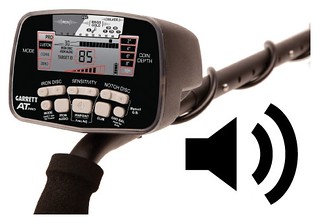
Having had the time to put some hours on the Garrett AT Pro International over a few months I've come to the conclusion that all detectors should come with a library of short audio clips to help new users to train their ears at home. Yes I know there are plenty of instructional video clips on youtube. But most of these videos have an audio stream that is out of sync with the video itself. Also many detectorists shoot videos that are far to dependent on the visual identification display on the detector itself. Im pretty sure that I'm not alone in saying that my hearing ability is far faster at processing the feedback from the machine then keeping my eyes glued to the detectors display looking at numbers that are displayed in a delayed fashion. In other words you hear the audio signal first and shortly after the display is updated. Yes the display is updated within milli seconds but I find this is enough to get on my nerves!
Anyway back to the topic of this post. The short audio clips below are examples of the feedback you get from your Garrett AT Pro International. I have used these to help me understand the makeup of the ground i am covering without the need to keep looking at the VID display. Also even though Garrett have a standard mode they recommend to new users I'd say just skip this mode and head straight into Pro Audio and learn from there.
I have included the STD audio clips just for reference.
So I hope someone might find these useful enjoy.
Garrett AT Pro International Pro Audio Mode
Garrett AT Pro International High Tone Pro Audio Mode
Garrett AT Pro International Iron Audio Bottle Top Sample Pro Audio Mode
Garrett AT Pro International Iron Audio Coin Sample Pro Audio Mode.
Garrett AT Pro International low Tone Pro Audio Mode
Garrett AT Pro International Medium Tone Pro Audio Mode.mp3
Garrett AT Pro International Proportional Audio
Garrett AT Pro International Tone Roll Audio Demo Pro Mode Bottle Cap Tone Roll Example
Garrett AT Pro International Standard Audio Mode
Garrett AT Pro International Tone Roll Audio Demo STD Mode Bottle Cap
Garrett AT Pro International Tone Roll Audio Demo STD Mode US Nickel
Garrett AT Pro International Tones High Tone STD Mode
Garrett AT Pro International Tones Low Tone STD Mode
Garrett AT Pro International Tones Medium Tone STD Mode.
Tuesday, 26 November 2013
Cscope CS4PI Pulse Induction Metal Detector Review
Given the amount of beaches we have in Ireland (East Cork in particular) a pulse induction machine seemed to be the way to go.

The machine itself is pretty simple with an automatic ground balance system all the user needs to worry about is switching on and hitting the beach. There isn't a pin pointing mode but finding your target is pretty easy because of the concentric coil search head. Using the side step method you can get a pretty good fix on your target.

Best thing about this machine is that when it beeps there is something down there under the coil simple as that. It does suffer from the same drawbacks of other pulse induction machines there is no discrimination of any kind so just dig every target.
I've had a chance to take this detector to a location that has some very mineralized sections and as such sections are no go for other types of detectors I've used. I've taken this machine into the worst sections of the beach and found plenty of the normal junk that I'd expect to find all over the the rest of the beach. As above if it beeps there is a target that needs digging.

Other things to note.
The control unit is not water proof so just be aware of this. You can belt mount the control unit making the detector very light indeed. If the machine gets a bump it will give a prolonged beep that lasts for a few seconds (1-2) as it re balances this seems to be normal so don't worry too much when this happens.
The overall build quality is good with the upper stem being metal and the lower a tough plastic. The control box is made out of a really good quality heavy duty plastic. It can also be belt mounted (The machine is supplied with a little belt attachment). The search coil is submersible and comes with a scratch cover as standard.
Video Review:
Here is a review that I found helpful when I was making decision to purchase.
Subscribe to:
Posts (Atom)